**Navigating the AI Agent Training Landscape on MCP:** From Core Concepts to Practical Setup (Explainer, Practical Tips, Common Questions)
Embarking on the journey of training AI agents within the MyCompany Platform (MCP) demands a solid grasp of core concepts, laying the groundwork for successful implementation. Understanding what an AI agent truly is – an autonomous entity designed to perceive its environment, make decisions, and take actions to achieve specific goals – is paramount. We'll delve into the various architectures commonly employed, from rule-based systems to sophisticated machine learning models like reinforcement learning and deep learning. Key considerations include defining the agent's objective function, selecting appropriate state representations, and designing effective reward mechanisms. Furthermore, we'll explore the critical role of data collection and preprocessing on MCP, ensuring your agents have high-quality input for optimal learning. This foundational knowledge is not just theoretical; it directly impacts the efficiency and effectiveness of your agent's performance in real-world scenarios within the MCP ecosystem.
Transitioning from theory to practice, setting up an AI agent for training on MCP involves a series of actionable steps and navigating common challenges. Initially, you'll configure your development environment, leveraging MCP's integrated tools for code management and resource allocation. This includes choosing the appropriate computing resources for your agent's complexity – think GPUs for deep learning models. Next, you'll implement your chosen agent architecture within the MCP framework, carefully integrating it with existing datasets and APIs. We'll provide practical tips for
- efficient hyperparameter tuning to optimize learning,
- debugging common training issues such as vanishing gradients or overfitting, and
- monitoring agent performance using MCP's built-in analytics.
A pay per call API enables businesses to programmatically generate and manage phone calls, often integrating with existing CRM or marketing platforms. This powerful tool allows for real-time call tracking, routing, and analytics, optimizing customer acquisition strategies. By leveraging a pay per call API, companies can efficiently connect prospects with sales teams or service agents, enhancing conversion rates and overall operational efficiency.
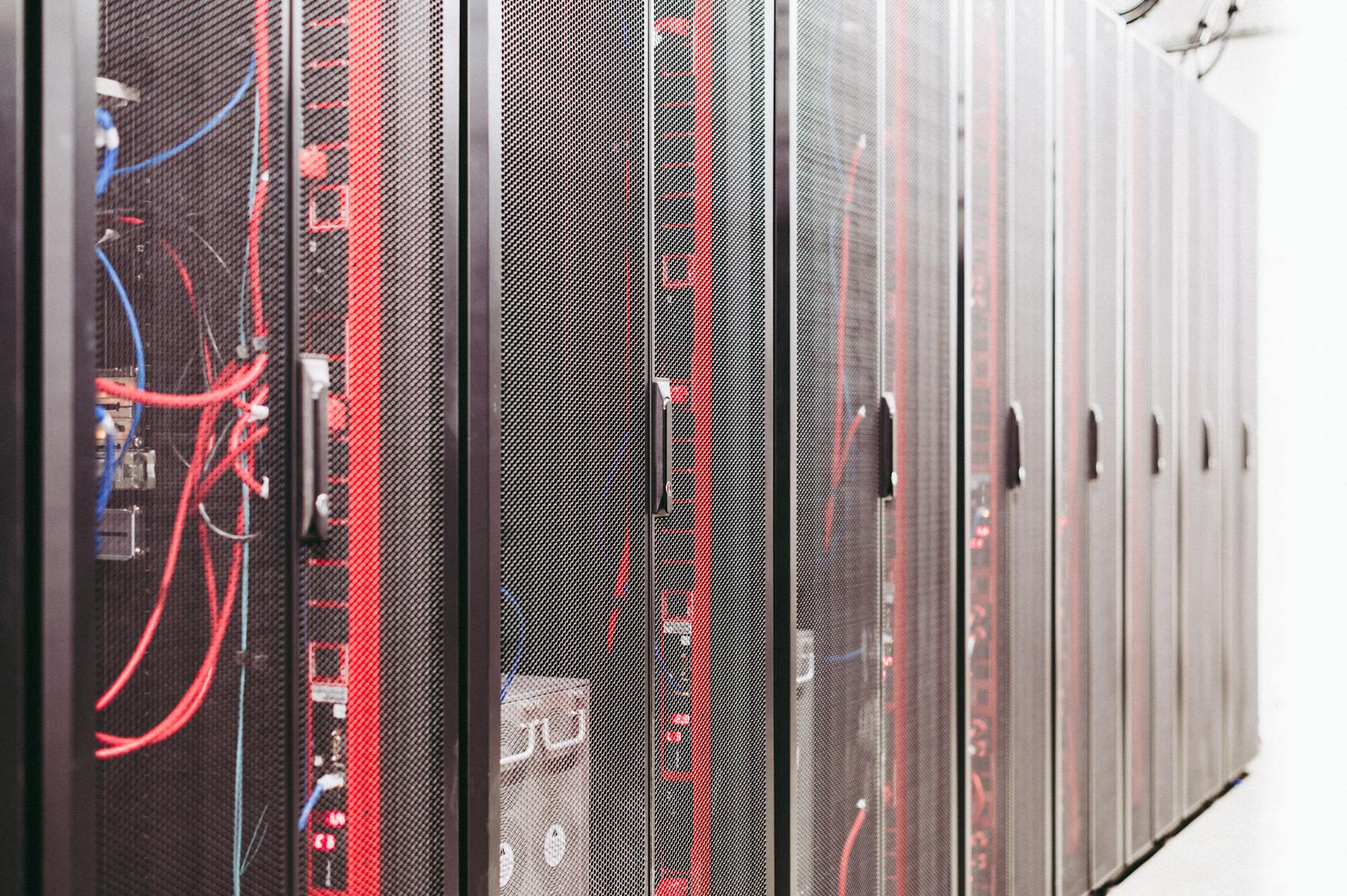
**MCP Servers in Action: Optimizing Your Digital Playground for AI Agent Training:** Performance Tips, Troubleshooting, and Advanced Use Cases (Practical Tips, Common Questions, Advanced Explanations)
Bringing your AI agent training to life on an MCP server demands careful optimization to truly unlock its potential. One critical aspect is resource allocation: understanding the balance between CPU, GPU, and RAM is paramount. For compute-intensive tasks like deep learning, prioritizing high-end GPUs with ample VRAM is non-negotiable, often overshadowing raw CPU clock speed. Furthermore, efficient data pipeline management is crucial. Consider implementing techniques like pre-fetching and caching to minimize I/O bottlenecks, especially when dealing with large datasets. Regularly monitoring your server's performance metrics – CPU utilization, memory pressure, disk I/O, and GPU temperature – through tools like `htop` or `nvidia-smi` will provide invaluable insights for pinpointing bottlenecks and making informed adjustments to your training scripts or server configuration. Don't underestimate the impact of properly configured drivers and libraries, as outdated versions can significantly hinder performance.
Troubleshooting and advanced use cases on MCP servers extend beyond basic resource allocation. When encountering training slowdowns or crashes, a systematic approach is key. Start by examining log files for error messages, which often point to issues with data formats, code bugs, or out-of-memory errors. For persistent performance dips, consider profiling your code to identify specific bottlenecks within your AI model's architecture or training loop. Advanced users might explore containerization with Docker or Kubernetes to create isolated, reproducible training environments, simplifying dependency management and enabling seamless scaling. Furthermore, leveraging techniques like distributed training across multiple GPUs or even multiple MCP servers can dramatically accelerate the training of massive models, allowing you to tackle more complex AI problems. Experiment with different model architectures and hyperparameter tuning strategies to find the optimal balance between performance and accuracy, truly maximizing your digital playground for AI agent development.